Monday - Friday 07:30 - 17:30, Saturday 07:30 - 16:00
Floor Sanding in Crouch End
Back to Portfolio
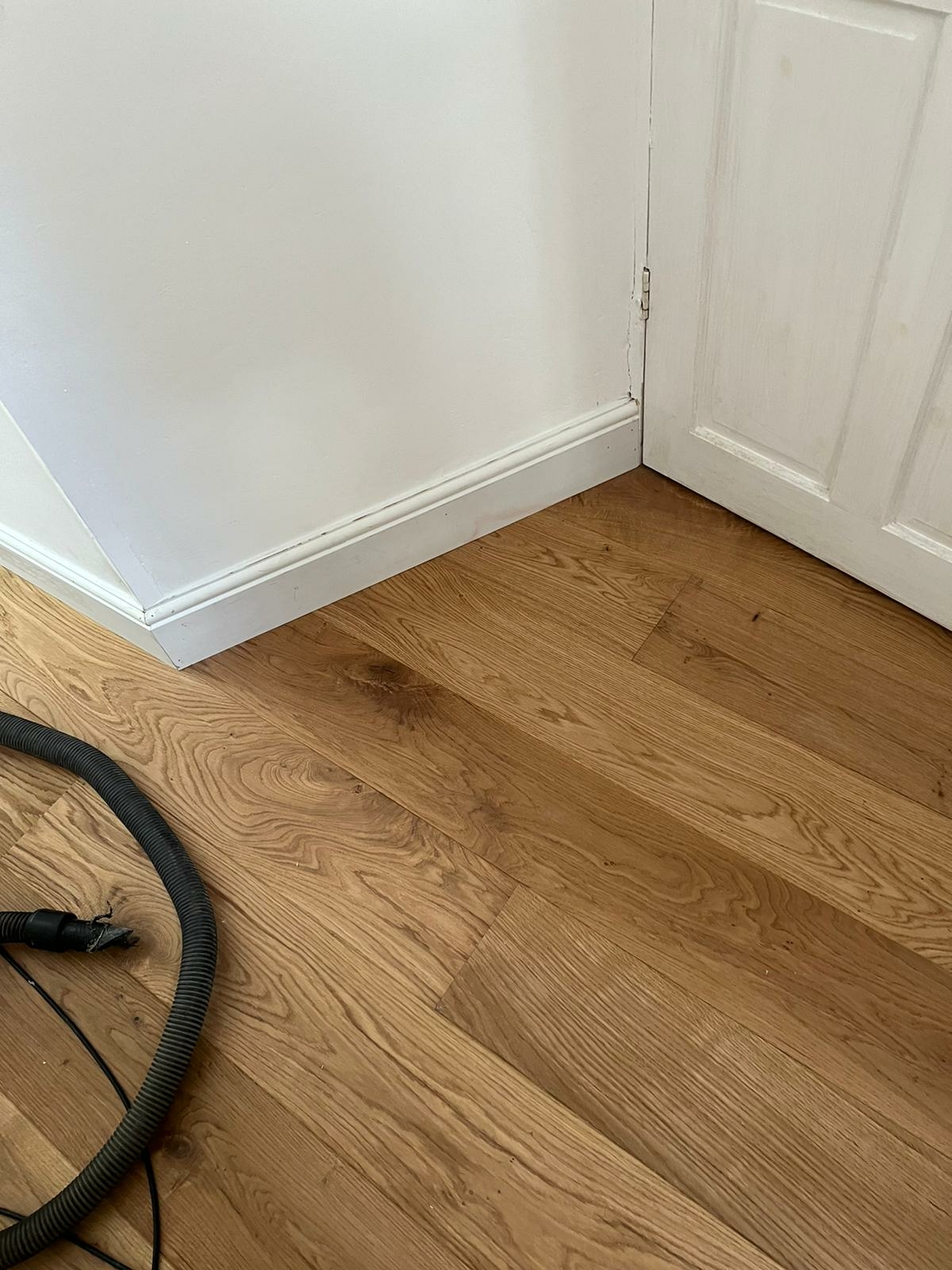


Floor Sanding in Crouch End
We recently completed a full floor sanding project on a Victorian terrace in Crouch End, working across three rooms of original pine flooring that hadn't been properly finished in decades. The wood was in good structural condition beneath years of accumulated dirt and patchy varnish, but needed careful preparation and expert technique to restore it to its original character. The result was a transformed interior that brought out the natural grain and colour of the timber.
Work carried out
- Complete floor sanding across all three rooms
- Dust containment and extraction throughout the process
- Assessment of existing floor condition and structural integrity
- Preparation of subfloors and removal of old finishes
- Multiple grit progression for even final surface
- Hand sanding of edges and corners
- Final surface preparation for new finish
About the project
This Crouch End property presented the kind of challenge we encounter regularly in the area. The original boards were solid pine, roughly 150 millimetres wide, laid directly onto joists with no underlay. Over time, the homeowners had applied various surface treatments that had worn unevenly, leaving the floor looking tired and patchy. Some areas showed minor gaps between boards, typical of Victorian construction where seasonal movement has never been properly addressed. Before we began work, we tested for any asbestos in old adhesives and checked moisture levels in the timber to ensure it was stable enough to sand.
Our approach involved a graduated sanding sequence starting with 36 grit paper to remove the old finishes and even out surface imperfections, then progressing through 80 and 120 grit for smoothness. We worked carefully around the perimeter, sanding edges and corners by hand to match the finish of the main floor. The whole process took four days on site, with dust extraction running constantly to minimise disruption to the rest of the house. Once sanding was complete, we left the floors ready for the client to apply their chosen finish, ensuring no dust or debris remained that might spoil a new varnish or oil application.
About our Crouch End service
Crouch End sits at the northern edge of North London, an area known for its period properties and established residential streets. We work regularly throughout the neighbourhood on properties dating from the 1870s through to the 1930s, though newer properties and recent conversions are becoming more common. Victorian and Edwardian terraces dominate the housing stock, and most of them contain original timber floors beneath carpet or damaged finishes. The solid pine and oak boards in these properties respond extremely well to sanding, and we've developed a particular understanding of the structural quirks and finishing requirements that these older floors demand.
Working in Crouch End means dealing with a mix of property types and floor conditions. Some homeowners have maintained their floors well over the years, requiring only light sanding and refinishing. Others are working with boards that have seen heavy traffic, impact damage, or previous amateur repairs that need careful attention. We also encounter converted properties where different flooring standards have been applied to different rooms, meaning the sanding specification needs to vary across the space. Our familiarity with the area helps us anticipate these variations and plan accordingly, whether we're working on a modest flat conversion or a full-width Victorian terrace.
Frequently asked questions
How much does floor sanding cost per square metre in Crouch End? Sanding typically costs between £25 and £45 per square metre depending on the floor condition and the area being treated. Floors that have been sealed or varnished multiple times generally fall toward the higher end. We provide a fixed quote after an initial site visit where we assess the timber condition and surface finish. How long does floor sanding take? A typical room of around 20 square metres takes one to two days to complete, depending on the floor condition and edge complexity. Larger areas or properties with multiple rooms can take three to five days. We arrange access and dust containment on the first day, with the final finish preparation usually completed by the final day. Do you use a dust-free sanding process? We use sanding machines fitted with industrial dust extraction systems that capture approximately 95 percent of particles at source. All our equipment is connected to HEPA filtration units. While no sanding process is entirely dust-free, our approach minimises airborne particles and protects furnishings and other areas of the property from the work.
Project Gallery